What baking soda and vinegar actually do
When baking soda meets vinegar, they react and produce carbon dioxide gas and water, with a mild fizz. The fizz can loosen a thin film of soap or grease on the pipe wall. Followed by hot water, it can move a small, soft clog a few inches.
What it cannot do is dissolve hair, break up a wad of paper, cut tree roots or clear a blockage in a main line. The reaction is short and gentle. It does not generate the force or the cutting action that a plunger, a cable or a jet does.
So the honest answer to the question is: sometimes, for a mild slow drain in a single fixture, and never for a complete blockage or a repeat problem.
How to try it safely
If a sink or tub is slow but still draining, this is a reasonable first step.
- Remove standing waterBail out what you can so the mixture reaches the clog.
- Pour in baking sodaAbout half a cup down the drain.
- Add vinegarAbout half a cup, then plug the drain to keep the fizz in the pipe.
- WaitTen to fifteen minutes.
- Flush with hot waterPour a kettle of hot, not boiling, water for plastic pipes. Run the tap and check the flow.
Never mix baking soda and vinegar with a commercial drain cleaner. Never use boiling water on a toilet. Porcelain can crack.
What works for which clog
Match the clog to the tool.
| Clog | Home remedy | When to call |
|---|---|---|
| Slow bathroom sink, hair and soap | Pull the stopper, clear by hand, baking soda flush | If it returns within weeks. |
| Kitchen sink with grease | Baking soda, vinegar, hot water | If several fixtures are slow. |
| Full blockage in one fixture | Plunger or hand auger | If a plunger does not clear it. |
| Several fixtures slow together | None, this is a main line sign | Right away. |
| Basement floor drain gurgling | None | Right away. |
Local note: hard water and slow drains
The City of Inver Grove Heights lists its water at 20 to 22 grains of hardness. Hard water combines with soap to form a curd that sticks to pipe walls, and with time it narrows a drain. That is why a mild fizz can help a slow bathroom drain, and why the same drain slows again a few months later.
If you see repeated clogs in several fixtures, it is likely not a home remedy problem. For a backup that repeats, the city lists Utility Maintenance at 651-450-4309, and Dakota County Dispatch at 651-322-2323 after hours, to rule out the city sewer main.
Why chemical cleaners are a worse choice
Store-bought liquid drain cleaners work by chemistry that generates heat or dissolves organic material. They can clear some clogs, but they can also sit in a blocked pipe, soften plastic fittings and burn a plumber who later opens the line. They do little against roots or scale.
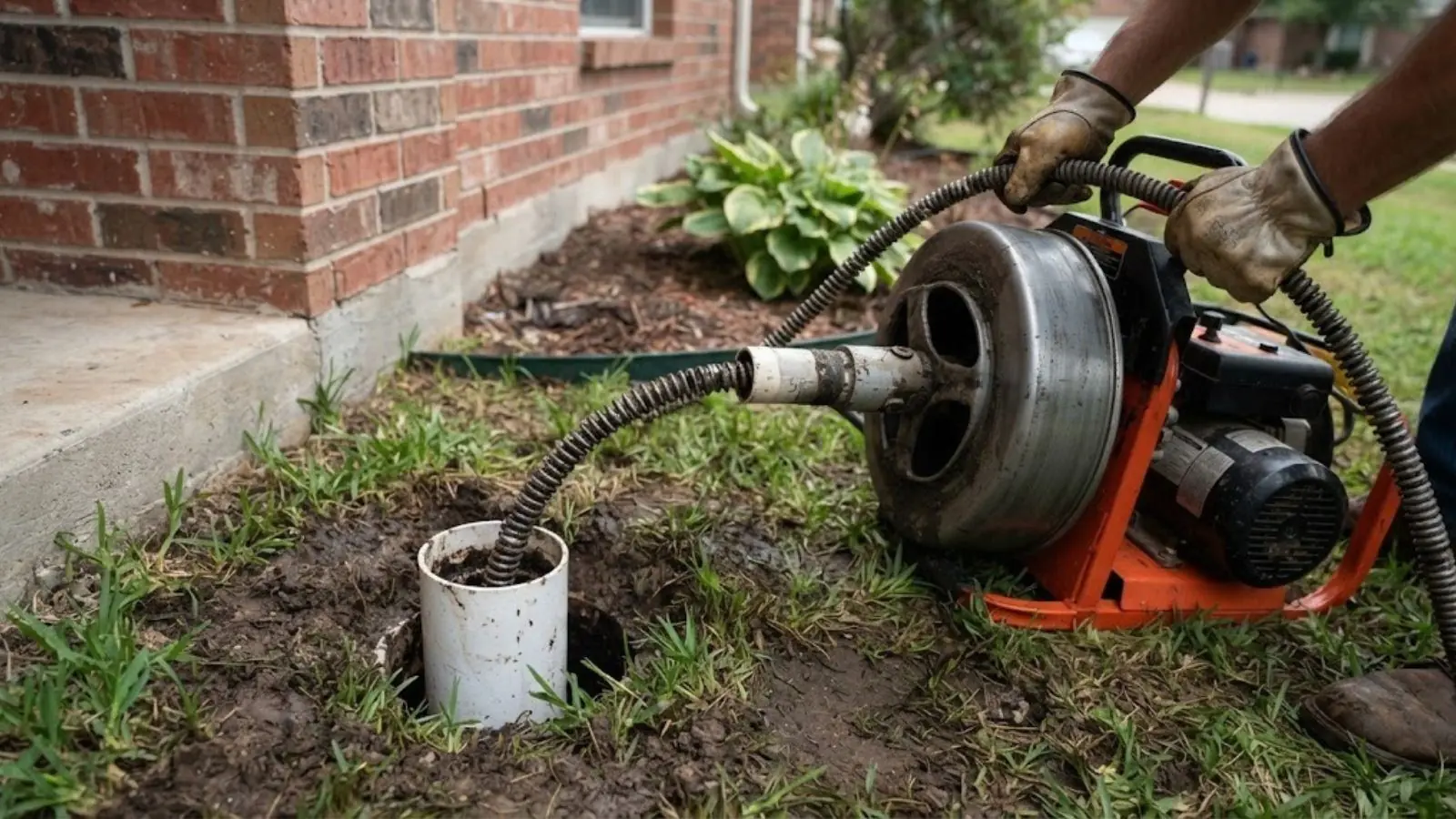
If a chemical cleaner has not worked, do not add another product. Tell the plumber what you used, because it affects the safety gear and the method. Our drain cleaning page describes the tools that work after home remedies fail.
For recurring clogs from grease or scale, a cable is not always enough. Hydro jetting scours the pipe wall and gives a longer-lasting result.
Habits that prevent clogs
Most clogs start with habits. Wipe pans with a paper towel before washing. Use a hair catcher in the shower. Never flush wipes or paper towels, even when the package says flushable. Run hot water after washing greasy dishes.
If you live in Eagan or West St. Paul, the same advice applies. Older homes with cast iron or clay lines are more prone to clogs, and those lines benefit from a camera look if clogs repeat.
A monthly baking soda flush on a kitchen drain is harmless, and it can slow buildup, but it is not a substitute for service when a drain keeps failing.
A better first move: remove the clog by hand
For a bathroom sink or tub, the most effective home fix is mechanical. Remove the stopper or the strainer, and pull out the hair and gunk with a bent wire or a plastic drain tool. Many bathroom clogs sit within a few inches of the opening.
Run hot water for a minute afterwards. If the water still drains slowly, a small hand auger reaches farther. Stop if you meet resistance that does not give, and do not force a cable through a toilet or a main line. A stubborn clog is a job for a machine with the right head.
How to tell a mild clog from a serious one
A mild clog affects one fixture and improves with a plunger or a short flush. A serious clog shows up in several places at once, returns within days, makes gurgling sounds in other drains or brings water up in the lowest drain of the house. These signs point past the fixture and into the branch or main line.
If you see the serious signs, skip the home remedies and stop running water. Extra water only makes a main line backup worse. That is the moment to call a plumber who can bring a machine and a camera.
A safer routine to prevent slow drains
Prevention beats rescue. Use a hair catcher in the shower, wipe grease from pans into the trash before washing, and flush the kitchen drain with hot tap water after cooking. Once a month, remove the stopper from bathroom sinks and clear the hair that collects on it by hand.
Guidelines worth knowing
According to the guidelines on most drain cleaner and pipe product labels, you should not mix chemicals, and you should never combine bleach with other cleaners.
Questions about baking soda and clogged drains
Rarely. A toilet clog is usually a solid mass. A flange plunger or a closet auger works better.
Small amounts are fine. Large amounts of any chemical are not good for a septic system.
If a plunger and a home flush do not clear it within a short time, or if more than one fixture is slow, call.
Start with the city's Utility Maintenance at 651-450-4309 by day or Dakota County Dispatch at 651-322-2323 after hours, and call a plumber for your own line.
It contributes. Mineral scale and soap curd narrow pipes over time.
Need help with this in Inver Grove Heights?
Call the 24/7 line and describe what is happening.
Call (651) 946-0134