Leak detection in Inver Grove Heights, MN
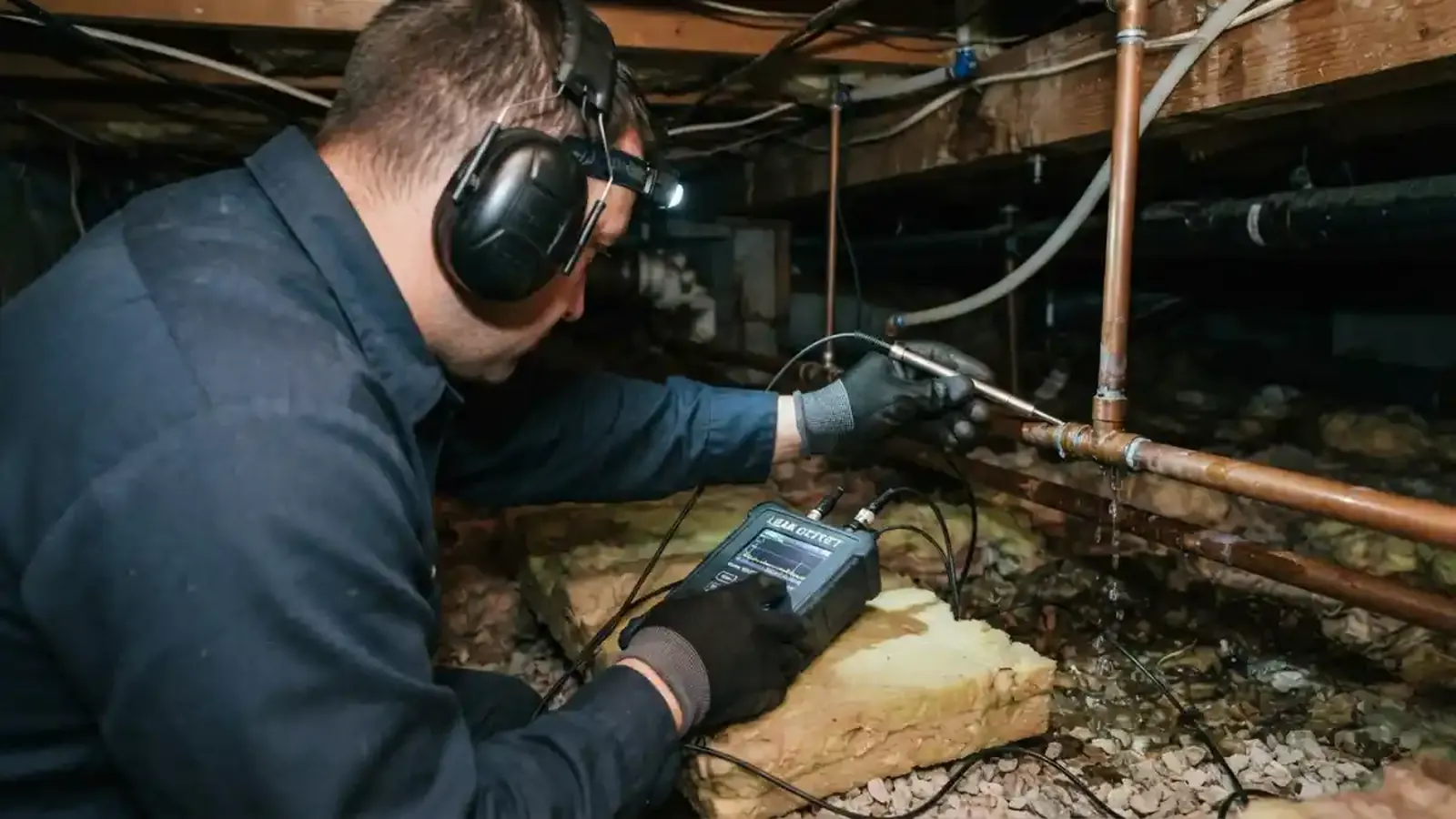
Leak detection is the work of finding where water is escaping when you cannot see it. Emergency leak detection in Inver Grove Heights is available 24/7 for active leaks. We schedule diagnostic visits for the slower signs: a water bill that creeps up, a meter that moves with everything off, a damp spot on drywall, or a warm patch on a floor.
The first move is simple and free to try yourself. Turn off every fixture, then check the water meter. If the dial or the low-flow indicator still moves, water is leaving the system somewhere. If it stands still, the leak is likely a fixture or a drip you can find by checking toilets with dye.
Do not start cutting drywall. A leak shows up where water ends up, not always where it started. A moisture meter and acoustic tools tell us where to open the wall, and often avoid opening one at all.
When a hidden leak is an emergency
Water that is soaking into drywall, running through a ceiling, or coming up through a floor needs fast action. So does a leak you cannot isolate that is running at a steady rate day and night. A slow pinhole can destroy a wall cavity over weeks, and a high-flow break can empty a lot of water into a basement in hours.
If you can locate the main shutoff, close it. The main usually sits near where the water line enters the basement, close to the meter. Opening a lower faucet drains the pipes.
If the city's water is the source and you cannot find a shutoff, the City of Inver Grove Heights lists Public Works at 651-450-4309 from 7 a.m. to 3:30 p.m. and Dakota County Dispatch at 651-322-2323 after hours for water main breaks and sewer backups.
Photograph the damage, move valuables, and call. We will tell you what to do next based on where the water is going.
How we locate a leak without demolition
Different tools fit different leaks.
| Tool or step | What it finds | When we use it |
|---|---|---|
| Meter test | Whether water is leaving the system at all | First step on a high-bill call. |
| Pressure test | Which zone of piping holds pressure | To split house plumbing from the service line. |
| Acoustic listening | The sound of water escaping from a pressurized pipe | Slab, wall and buried pipe leaks. |
| Thermal imaging | Temperature differences from hot-water leaks or damp insulation | Warm floors, ceiling stains. |
| Moisture meter | Dampness inside drywall and framing | To bound the damage before repair. |
Where leaks hide in Inver Grove Heights homes
Older homes tend to have galvanized or early copper supply lines and cast iron drains. Pinholes in old galvanized and early copper lines are common failure points. Homes from the 1980s and early 1990s may have older plastic fittings that crack or loosen with age.
Basements hide a different problem. A drip behind a finished wall may run for months, and the first sign is a musty smell or a bubbling paint finish. Leaks on the service line, between the street and the house, show up as a wet yard or a meter that runs with the house off. See water service line repair for that side.
Fixtures count too. A toilet fill valve that leaks into the bowl can use a lot of water a day without a sound. Our toilet repair page covers that, and it is the first thing we rule out.
What to check before the technician arrives
Two minutes of checking helps the diagnosis.
- Read the meterNote the reading with all water off, wait twenty minutes, and check again.
- Dye test the toiletsAdd a few drops of food coloring to each tank and look for color in the bowl without flushing.
- Look at the water heaterCheck for dampness at the base and the relief valve.
- Check the outside faucetsA hose bib that drips inside the wall is common.
- Note where it is wetPhotograph stains and mark the edges with a pencil so we see if they grow.
What decides the leak detection price
We give a clear price before work starts.
Sudden pipe bursts may be covered by homeowners insurance. Slow leaks and wear usually are not. Keep records of when you noticed the problem. Call for your real number: (651) 946-0134.
Standards and local rules
Finding a leak is a diagnostic step. Any repair that follows has to use materials approved by the Minnesota Plumbing Code, Minnesota Rules chapter 4714, which is based on the Uniform Plumbing Code (UPC). Ask for the location of the leak in writing or with photos, so your insurer and any later plumber can see it.
Leak detection questions
Yes. Our line is open 24/7 and we dispatch for active leaks any hour. Close the main shutoff if you can reach it and call.
Compare it to your usual use. Then do the meter test with all fixtures off. A moving meter confirms a leak somewhere. Ask the city's utility billing office about the bill itself.
Often, yes. Acoustic listening, thermal imaging and moisture mapping narrow it to a small area. We open only where needed.
That is the service line. The city publishes a service line materials inventory, and its water report points owners to the state's Lead Inventory Tracking Tool to check their own line. See water service line repair.
The city handles its own mains. The private side of the service line is the owner's responsibility. Call us and we will find which side of the property line the leak is on.
Yes. See our Eagan page for what we handle there.
Water going somewhere unseen?
Call the 24/7 line. We will start with the meter and work inward.
Call (651) 946-0134